Can you hear me now?

For the last few years of his life, my father sat in relative silence in one of his favorite places: the church sanctuary. I know this because of one of the most intimate gifts from his personal library.

After his death, Mom gave me Dad’s well-used New English Bible, which he’d filled with copious handwritten notes. Always armed with at least one flair pen in the pocket of his jacket, he liked to document family events by scribbling down the date or a brief description next to a particular verse. When he listened to a sermon, he noted the preacher’s initials and the date, often squeezing memorable quotes and his own commentary into the margin. The emotions were raw when Mom handed me the hardcover heirloom, snug in its special cloth jacket. I started leafing through the pages, and within a few minutes, Dad’s detailed notes were conjuring up milestones in my own life—graduation from high school and college, my move to Chicago, my wedding, the birth of my daughter, to name a few. I soon noticed the absence of any annotations during the five or so years leading up to his death.

At that moment, I began to recall, with more than a tinge of regret, all those times we had teased Dad for turning up the volume on the TV too high. Or for misinterpreting something that one of us had said because he hadn’t heard it clearly. We’d been numb to the needs of a proud man coping with the diminishing power of his aging body. A year or so before he died, Dad caved in and bought an over-the-counter hearing aid. I think he wore it once. The rest of the time, the device stayed in its case on his dresser.

A few years ago, I began noticing a decline in Mom’s hearing. At first I couldn’t tell if it was simply because she was living alone and not using English as frequently as before. The lost look on her face when we were in church or at a lecture was unmistakable. On more than a few occasions,  I would go to her house, ring the doorbell, and finally use my key to let myself in, only to find her in an upstairs room on the computer or at her sewing table, completely oblivious to the sounds of my arrival. I eventually convinced her to go for a hearing test with an otolaryngologist. Dr. Jeyapalan’s examination confirmed slight hearing loss; he gently encouraged Mom to think about buying a hearing aid. She nodded politely as we left his office. By the time we were in the parking lot, she turned to me and said, quite emphatically, “I’m not getting one.”

A month ago, Mom had her hearing retested. This time, she had gone to her appointment carrying ads for hearing aids which she had clipped out of her AARP magazine. About a week or so later, on the advice of Dr. Jeyapalan, I took her to Buffalo Hearing & Speech Center. There we met Julie, whose patience and compassion put us both at ease. She reviewed the results of Mom’s hearing test, explained the advances in medical technology, and showed us three different kinds of listening devices. Within a half hour, Mom had not only picked her preferred behind-the-ear model, she was also choosing a specific color. We’re going back next week so she can be fitted with her new pair of hearing aids. And as optimistic as I am that the 75-day trial period will mark a beginning, not an end, I can’t help but think about Dad—and his apparent choice to sit in silence for so many years. Would things have been different, had we found a more sensitive approach to helping him?

Food, glorious food

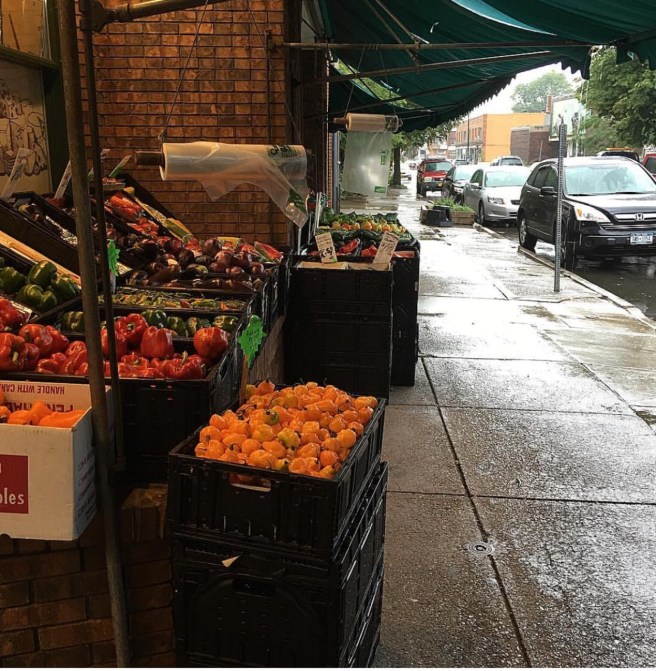
It has become our Saturday afternoon ritual. I pick my 85-year-old mother up from her apartment in the late afternoon and we drive to Guercio’s, a family-run grocery store on the west side of the city. My parents used to come here regularly, but after Dad died, I suspect it became one of the many places that evoked too many memories of their life together. Especially throughout the 1990s, their Tuesday “dates,” which included movies, restaurants, and outings to favorite supermarkets, helped them cope with the empty nest and reinvigorate their lifelong romance. A few weeks ago I started taking my mother back to Guercio’s; I wanted to help her reclaim places that had once been a source of pleasure and sustenance for everyday life.

Mom and I usually begin our shopping together at the outside produce stand, grabbing plastic bags and picking through the locally grown apples and plums. Within a few minutes, she has already gone inside to buy salami at the deli counter. I’ve entered through the other door, in search of bananas, blueberries, and garlic. Within a half hour, we meet up at the cashier area, each of us armed with bags of goodies for our respective larders.

I want my mother to keep finding joy in food, even as she continues to navigate her solitary life and the realities of getting older. My brother and I meet at her apartment nearly every Friday after work for a simple family meal, often followed by spirited conversation about our jobs or politics. She still likes to cook for us, though perhaps it’s time to start bringing our own contributions to the table.

guercios               Guercio & Sons outdoor produce stand on a rainy Saturday
Forever grateful

Originally published in the February 2016 issue of Forever Young magazine.

Staring at the piles of garden tools, old paint cans, and dust-covered appliances that haven’t been used in decades, my mother and I are a bit daunted. The basement, the realtor tells us, is a good place to begin. But how do you begin to sort through forty-five years of living in a house that was the home for three children and became the emotional center of a marriage that endured for more than half a century?

Two winters ago, my mom ventured outside to retrieve a bag of rock salt from her car. She slipped on the icy sidewalk and hit the back of her head. Having managed to lift herself up, she walked gingerly back inside and called me at work. I rushed to her house, where I found her in the kitchen, nursing a huge lump with a hastily made ice pack. We couldn’t detect any blood, but we knew a trip to the ER was a sensible idea. Mom ended up having to spend the night in the hospital; they administered a CT scan to confirm the absence of internal bleeding and hooked her up to some sort of monitor. Throughout all of this, my thoughts intermittently shifted to another day from seven years earlier. It was in April of 2007 when my father, then 75, suffered a hemorrhagic stroke. From the minute he was found lying on the floor at home to the moment Mom, my siblings, and I gathered around his bed in the ICU to say goodbye, I felt the inexorable pull of life’s harsh transitions.

The aftermath of Dad’s death left us all a little numb, and more than a bit disjointed and lost. We each were adrift on the sea of grief in our own private vessel; the pain might have been broadly shared, but the process of experiencing it was different for each of us. I still can’t begin to imagine the depths of sorrow Mom endured those first few years. I only wish I could have been better equipped to help her through them.

I think back to the happiest days of my youth—and even the saddest—and realize how fortunate I was to be grounded in the love of family. We weren’t wealthy compared to other families in our neighborhood, but I never wanted for anything. And although it’s hard to confront the mortality of those we love, I realize now that the inevitability of aging and dying is exactly what makes loving and living so real—and eternal. Even if we become parents ourselves, I don’t think we fully grow up until we witness the frailty, or experience the loss, of our own parents.

This April marks nine years since Dad died. A lot has changed—once-tiny grandchildren are now in high school or college—and more changes are afoot. The details of the next chapter in Mom’s life may still be unknown, but the urgency with which we prepare for it is real.

And so back to the cellar and all those piles of memories we go—it’s the only way to work up to the main floors and the even dustier attic, where more surprises await. Although the task is monumental and the sorting through of things bittersweet, I quietly embrace this gift. Spending time with a woman who, at 84, is still remarkably spirited, becomes a chance to get to know my mother even better. To hear more family stories—ones I hadn’t heard before—and to create new memories.

I believe it was psychiatrist and author M. Scott Peck who wrote that those who obsess about the past fear the future, and those who fixate on the future have unresolved issues with their past. The key is to find the balance and truly live in, and for, the moment. I think love is a powerful force with which to meet the present, indulge in memories that can transport us, albeit fleetingly, back to the past, and most importantly, stay hopeful and focused for the future.img_2940

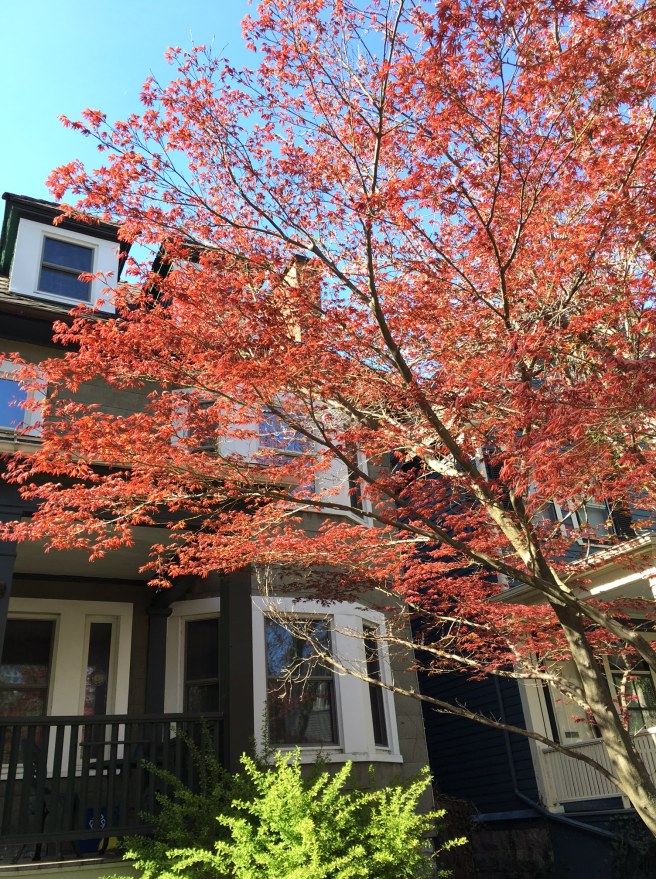
The Japanese maple tree in front of the family house

Breathing in

I think the best way for me to describe my reasons for starting this blog is through a poem I wrote back in 2015.

Outlining: a poem for my mother (and father)

stop growing old
just for a moment
or at least help me understand
my role, my stance
as I find my footing and search for space
between our tentative boundaries.

where do you end and
where do I begin?

I see you: at once an infinitely strong
and courageous woman
who adored her husband and
held our family together
with endless bowls of steaming white rice
and the swirling sounds of music
classical and elegant
sometimes dark and mysterious
this became your gift
enriching our minds, caressing our souls
just like your soft hands and kisses
when we were good, or hurt, or eager to sleep.

I look again, and glimpse a face that’s
wrinkled and confused
occasionally distant, yet still familiar
I catch my breath and gaze
the maternal beauty is still there
underneath the weight of time.

now spread across the kitchen table
are letters, bills, and looming decisions
a multitude of worries about how to manage
the gift and burden of
living so long, without him.

where do you end and
how do I begin

even to imagine
a life without you, too.